
A well-known international news brand may be useful for global context without being the strongest source for a particular country. An outlet with experienced correspondents in Brussels may offer detailed coverage of European institutions but depend heavily on partner agencies for events in provincial Indonesia. Another publication may have excellent financial reporters in Singapore while providing little original reporting on local politics elsewhere in Southeast Asia.
The right choice therefore depends on the story, the location, and the reporting access required. A national election, an earthquake, an energy-policy dispute, and a disease outbreak each demand a different reporting network.
The most useful evaluation begins with four questions: Who reported the story? Where was the reporter? How was the information obtained? Has the reporter followed the subject long enough to understand it?
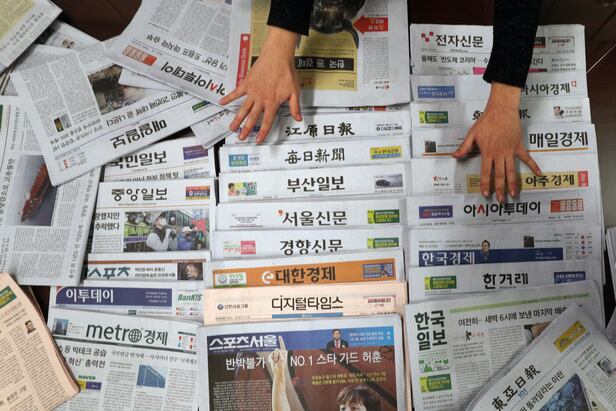
The reporting need behind the source choice
Before comparing news sites, define the information you need. A source that is suitable for confirming an official decision may not be able to explain how the decision affects residents.
A government notice, court judgment, election commission, or statistical agency is usually the best starting point for an official result or legal text. A local newsroom may be better for public reaction, enforcement problems, and effects outside the capital. A specialist publication can explain the technical or commercial consequences.
The location of the event also matters. A correspondent based in the national capital may have excellent access to ministries, diplomats, and corporate executives but limited knowledge of a flood, protest, industrial accident, or land dispute hundreds of kilometres away.
For a major story, look for sources serving different purposes:
- A primary source for the original document, figure, or decision
- A local source with access to residents and institutions
- A specialist source with a history of covering the subject
- An international source for regional or global context
These sources should provide independent reporting. Ten articles based on the same agency dispatch do not amount to ten confirmations.
Local reporters and regional bureau structures
An “Asia,” “Europe,” or “Middle East” section does not prove that an outlet has reporters throughout the region. The section may contain work from a single regional hub, freelance contributors, partner news agencies, or journalists working from another continent.
Open the reporter’s profile before relying on the article. Look for a stated location, regular reporting beat, language ability, and a history of articles about the same country. A full-time resident correspondent will usually have repeated contact with local institutions, community leaders, researchers, lawyers, and civil society groups.
The byline can reveal whether the named journalist reported the story or only assembled material from other sources. Phrases such as “with reporting by,” “additional reporting,” and “news agencies contributed” identify other parts of the reporting chain. A story may carry an international outlet’s branding while most of its facts come from a local agency.
A bureau page can provide further evidence. Check whether the outlet names reporters assigned to the country, supplies local contact information, or lists only a regional editor in a major hub. Search the site for recent coverage by those reporters. An old staff page is less useful than a consistent stream of current bylines.
A resident reporter is not always better than a visiting correspondent or freelancer. Local freelancers may have exceptional access, language skills, and knowledge. The important distinction is between original reporting and distant rewriting, not between permanent employees and other legitimate contributors.
Metropolitan reach and on-site accessibility
A reporter’s presence in the country does not mean that the reporter was near the event. Reporting networks are often concentrated in capitals and financial centres. This can be sufficient for central-bank decisions, national legislation, diplomatic meetings, or corporate announcements. It is less sufficient for events whose meaning depends on conditions in a particular community.
The required access varies by story type:
| Type of event | Most valuable access |
|---|---|
| National election | Election officials, campaign offices, polling places, and voters in several regions |
| Natural disaster | Affected communities, rescue agencies, hospitals, and local authorities |
| Energy project | Project site, local residents, regulator, company, and environmental specialists |
| Public health outbreak | Health authority, hospitals, laboratory experts, and affected communities |
| Armed conflict | Reporters near the affected area, verified visual evidence, and independent security sources |
| Court or policy decision | Original text, legal specialists, responsible agency, and affected groups |
Check the dateline, photographs, interview locations, and descriptions of the reporting process. A capital-based reporter can still produce strong provincial coverage through trusted local colleagues and direct interviews. The article should make that arrangement clear.
Do not treat physical presence as the only measure of quality. During a war, epidemic, disaster, or government restriction, entering the area may be unsafe or prohibited. Remote reporting can still be credible when the journalist explains the limitation, uses several independent contacts, and verifies documents, images, or testimony.
Original reporting and republished material
Republishing an agency report is common and not inherently unreliable. News agencies provide fast coverage to publications that cannot maintain reporters in every location. The problem arises when readers mistake redistributed material for independent confirmation.
Compare several passages from different articles. Identical quotations, facts in the same order, and matching descriptions often indicate a shared source. Look at the credit line at the beginning or end of the article for the name of a wire service or local agency.
An original local report will often contain details unavailable elsewhere:
- Interviews conducted by the named reporter
- Local documents or data
- Descriptions from a specific scene
- Quotations from residents, officials, and specialists
- References to previous local disputes or decisions
- Contact with people outside national institutions
- Follow-up reporting after the international media have moved on
The absence of these details does not prove that the story is wrong. It shows that the article may be useful for a summary rather than for local depth.
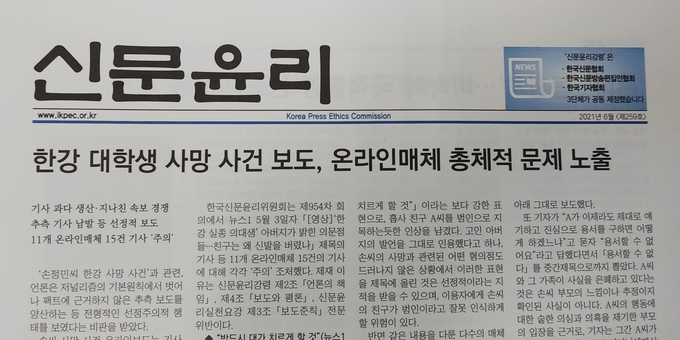
Cross-language source diversity
English-language coverage provides only part of the available record. Important statements, laws, court decisions, and interviews are often published first in the local language. The English version may shorten the original, remove qualifications, or use a translated term with a different legal meaning.
Compare at least three versions when accuracy matters:
- The original document, speech, or statement in its source language
- A local media report written for readers in that country
- An international or translated report intended for foreign readers
Keep the original wording of names, institutions, legal provisions, and disputed terms in your notes. Add a translation next to it rather than replacing it. This makes it easier to search local news sites and prevents several people with similar translated names from being confused.
Proper nouns may appear in different romanization systems. A ministry, political party, court, or administrative region can therefore have several English spellings. Search both the English form and the original script.
Automatic translation is useful for finding relevant passages but should not be treated as the final authority for legal or technical language. Negation, levels of obligation, institutional titles, and quotations are common sources of error. Words translated as “must,” “may,” “guideline,” “ban,” or “approval” can have materially different meanings in the original text.
Differences between language editions are also informative. A local report may focus on domestic political conflict, while the English edition emphasizes trade or diplomatic consequences. Compare what each version includes, omits, and places in the headline. Do not assume that a translated edition is a complete copy of the original.
Long-term subject expertise
A reporter who has covered an institution for years will usually recognize developments that a one-time correspondent may miss. This is especially important for elections, energy, healthcare, security, climate policy, central banking, and technology regulation.
Open the author’s previous work and look for continuity. Has the reporter covered earlier stages of the same policy? Does the journalist know the relevant agencies, companies, political factions, and community organizations? Are recent claims connected to earlier promises, disputes, or data?
Depth can be seen in the questions the article answers. A one-off report may state that an energy project was approved. A reporter who has followed it for several years may explain how the approval differs from an earlier proposal, which permits remain outstanding, how the financing changed, and why local opposition continues.
Past coverage also reveals whether the journalist revisits claims after the initial announcement. Strong specialist reporting follows implementation, court challenges, budget changes, missed deadlines, and measurable outcomes.
Review the correction history as well. Occasional corrections are not evidence of poor journalism by themselves. A clear correction can show that the reporter and newsroom acknowledge mistakes. Greater concern is warranted when old errors remain uncorrected, articles change without explanation, or repeated factual problems appear in coverage of the same subject.
Reporting methods and access limitations
A trustworthy article allows readers to understand how its information was gathered. The reporter may state that the account is based on attendance at the scene, interviews by telephone, an official briefing, court records, satellite images, leaked documents, or information supplied by a local partner.
This disclosure is particularly important when access is restricted. Government authorities may bar reporters from a conflict area, close a disaster zone, restrict hospital access, or refuse entry to foreign media. The article should distinguish between what the reporter observed and what was described by other people.
Anonymous sources sometimes have legitimate reasons for withholding their names. Officials may risk losing their jobs, while residents in an authoritarian system may face arrest or retaliation. The article should still provide enough information to judge the source’s position and access, such as “a hospital employee who reviewed the records” or “two officials involved in the negotiations.”
Claims based entirely on anonymous sources require additional caution when no document, named witness, visual evidence, or independent confirmation is provided. Look at how the article expresses uncertainty. Responsible wording separates confirmed facts from estimates, allegations, preliminary accounts, and information that could not be independently verified.
Absolute language is a warning sign when direct access was impossible. A careful report will explain what remains unknown and why.

Editorial transparency and accountability
Local presence and subject expertise are strongest when supported by transparent editorial practices. Review the outlet’s ownership, funding, corrections policy, author pages, opinion labels, and contact information.
Ownership does not automatically discredit a publication, but it can shape editorial priorities. A business newspaper owned by a company with interests in energy, telecommunications, or construction should disclose that relationship when reporting on the same industry. State-funded outlets may provide valuable official information while giving limited space to opposition views.
Clear separation between news, opinion, sponsored content, and partner material helps readers understand what they are seeing. An article without a byline, publication date, source links, or correction channel is harder to evaluate.
A practical source-selection process
Begin with one recent article from the outlet and trace its reporting chain. Identify the byline, dateline, source credits, interviews, and documents. Then open the reporter’s profile and at least five earlier stories about the same country or subject.
Search for a local-language report and retain the original spelling of key terms. Compare the facts, quotations, headline, and level of certainty. Check whether the international article adds independent reporting or mainly translates material already published elsewhere.
Finally, match the reporting network to the event. A capital bureau may be ideal for a ministerial decision but inadequate on its own for a rural disaster. A specialist reporter may explain the policy well but still need local reporting on its social effects.
The best overseas news source is not a permanent choice. It is the outlet, reporter, and reporting chain that have the right access and experience for the particular story.